


Ambush Marketing Risks During the Olympic Games

As the Paris 2024 Olympic Games approach, the eyes of the world will be on France, and many economic operators hope to take advantage of this period to boost their activity. However, riding the wave of the Olympic Games is not without risk!
July 2024
By Pierre Favilli,
Industrial Property Attorney,
Deputy Managing Director, LEGIMARK
While the general public is aware of the inherent risk in reproducing or imitating Olympic emblems and properties protected by the Sports Code and the Intellectual Property Code, it is also important to warn against the risks posed by commercial communications that suggest an official partnership with the Olympic Committee. Explanations.
Definition of Ambush Marketing
Resources from partnership contracts represent one-third of the finances required for organizing the Olympic Games. The sums involved are considerable, as evidenced by the amount spent by LVMH to become a premium partner of the Paris 2024 edition, estimated at approximately 150 million euros. While many operators cannot afford such sums to be an official partner of the event, some are willing to implement a commercial strategy aimed at profiting from the favorable context at a lower cost.
Ambush marketing refers to an advertising practice aimed at taking advantage of a sporting or cultural event to associate one’s image with it and gain public visibility, without compensating the event organizer. While not prohibited in principle, ambush marketing can be condemned on the grounds of tort liability, under the concept of economic parasitism, which is defined as
The Olympic Games are frequently the scene of ambush marketing acts. Let’s cite two cases identified during the London 2012 edition. By performing his sprint with a 500,000 dollar Richard Mille watch on his wrist, athlete Yohan Blake gave significant visibility to the watchmaker, to the detriment of Omega, the official partner of the competition. For its part, by distributing its audio headphones to numerous athletes, Beats gained greater visibility than Panasonic, despite the latter being a sponsor.
Condemnation of Ambush Marketing on the Grounds of Economic Parasitism
While acts of ambush marketing can take multiple forms, French jurisprudence indicates that these will be condemned on the grounds of economic parasitism when they contribute to creating a link, in the public’s mind, between the economic operator not benefiting from official sponsor status and the event to which it is linked, in order to profit, without spending anything, from the efforts made by the organizer.
The reproduction of the name of a sports competition by a third party to promote its activity is thus punishable when it cannot justify a necessary use (Paris Court of Appeal – Pôle 05 ch. 01, October 14, 2009 / Case No. 08/19179). In this case, a sports betting site was prosecuted for using the name
Furthermore, a simple lottery addressed to a company’s clients with the aim of winning access tickets to a competition can be condemned if it fosters the idea of official partner status (Versailles Court of Appeal – 1st chamber 1st section, March 10, 2016 / Case No. 14/00536).
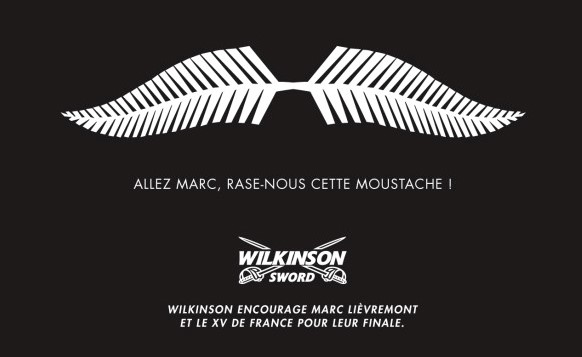
The same applies to advertising associating a company with athletes or a team competing in a competition (TJ Paris, June 27, 2014, Case No. 12/12555, FFR / Wilkinson – JWT). A few days before the 2011 Rugby World Cup final, ENERGIZER GROUP FRANCE published a poster associating its Wilkinson brand with the statement
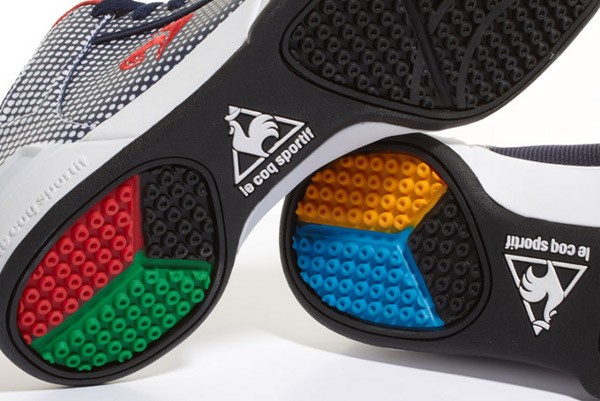
A particularly interesting decision was rendered following the use of Olympic colors (TGI PARIS, 3rd chamber, June 13, 2014). Approximately three months before the start of the London Olympic Games, the company Le Coq Sportif presented new sneakers whose soles featured the Olympic colors, without these being presented in the form of rings. It should also be noted that these shoes, designated under the name “The Olympic Dream”, were associated with the image of athlete Joakim Noah, who was supposed to participate in the competition. It was by assessing the appearance of the products and their presentation conditions that the judges considered that the French company sought to insert itself into the wake of the London Olympic Games. The inspiration from Olympic Committee attributes made shortly before the start of the competition was thus recognized as an act of parasitism. In this case, the commercial association with a globally known athlete who was supposed to participate in the Games only reinforced the idea of a link, in the public’s mind, between the event and the company Le Coq Sportif. The latter defended itself by stating that the disputed shoes had not been offered for sale but were only presented on its website and offered for pre-order in a few rare boutiques. Indeed, only about fifty pairs of sneakers were available, and their price barely exceeded 100 euros. In this context, the judges did not, however, consider the damage suffered by the Olympic Committee to be minor. On the contrary, they ruled that the purpose of the pre-sale of these sneakers was to create an event around their release and to offer visibility to the brand, rather than to generate profits directly from the commercialization of the model. Given the public enthusiasm generated, the Committee suffered a loss of earnings that could be quantified as the amount it would normally have received for this communication operation if the defendant had entered into a paid partnership with it. Also noting that the latter suffered reputational damage with its official partners, who might doubt the value of seeking official Games partner status, the judges thus ordered Le Coq Sportif to pay the Olympic Committee the sum of 100,000 euros in damages.
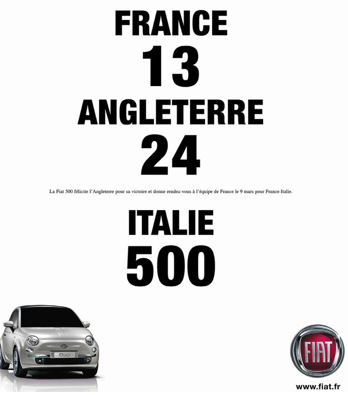
Given the diversity of condemnations of ambush marketing acts in the context of major sporting competitions, it is legitimate to question the possibility of capitalizing on such a communication strategy. Rare decisions show that judicial condemnation is not automatic. The criterion remains that of ambiguity regarding potential official sponsor status. Thus, the Court of Cassation did not condemn FIAT following an advertisement reproducing a simple sports result and the date of an upcoming match, associated with the congratulatory message “The Fiat 500 congratulates England on its victory and sets a date with the French team on March 9 for France-Italy” (Cass. Com, May 20, 2014, Case No. 13-12102, FFR / Fiat).
In conclusion, the case of ambush marketing during the Olympic Games highlights the importance of fairness that should govern all economic activity.
LEGIMARK, a firm of industrial property attorneys, is at your disposal to support you upstream of all commercial projects and communication campaigns, in order to assess and eliminate potential legal risks.