


Trademark infringement – Paul v. Pol’s

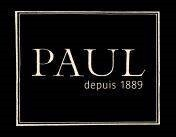
In a dispute between the owner of the “PAUL depuis 1889” trademark and an application for the “Pol’s FREEZE FRESH” trademark, the Court clarified the conditions under which the existence of a link in the public mind can lead to the characterization of a risk of unduly benefiting from the reputation of a prior trademark. The decision provides a detailed reminder of all the conditions required to bring an action on the grounds of infringement of a trademark’s reputation.
On the judgment of the European Court of First Instance of March 4, 2026, Case T-106/25
Analysis of the distinctive and dominant elements of conflicting signs
The EUIPO’s Opposition Division accepted the opposition filed by Holder, owner of the “PAUL depuis 1889” trademark, on the basis of Article 8(5) of Regulation 2017/1001. The Office first noted that the earlier trademark enjoyed a reputation among a significant part of the French public, in particular for bakery and pastry products as well as catering and food retail services. This reputation, which was amply documented in the file, resulted from the intensive use of the trademark within the network of bakeries operating under the “Paul” banner, which is particularly well established in France.
The EUIPO then proceeded to analyze the sign “Pol’s FREEZE FRESH”. In assessing the overall impression produced by the figurative mark, the Office considered that the expression “Freeze Fresh” would be understood by the relevant public as evoking the characteristics of the food products concerned, referring to the idea of frozen products or products that retain their freshness. This element was therefore considered to be descriptive, or at least weakly distinctive, for a large proportion of the products covered by the application for registration.
Under these conditions, the consumer’s attention was likely to focus primarily on the “Pol’s” element, presented in a colored box within the contested sign. According to the EUIPO, this element was the most distinctive component of the mark applied for. However, the Office noted that this verbal element had a particularly marked phonetic proximity to the name “Paul”, the central element of the earlier trademark.

In view of this proximity, combined with the reputation of the earlier trademark in the food sector and the proximity of the products concerned, the Opposition Division considered that part of the relevant public could be led to draw a similarity between the signs in question. The EUIPO deduced that use of the trademark applied for was likely to take unfair advantage of the reputation and distinctive character of the earlier trademark, thereby justifying refusal of registration for the bulk of the goods concerned.
A defense focused on the overall impression
Challenging the EUIPO’s analysis, the applicant company’s main contention was that the Office had wrongly assessed the contested sign by artificially isolating the “Pol’s” element to the detriment of the other components of the mark. In its view, the figurative mark should be considered in its entirety, as perceived by the average consumer, without giving priority to any particular element. From this perspective, the expression “Freeze Fresh” constituted an essential component of the sign applied for, and played a full part in the overall impression produced by the trademark.
The applicant thus argued that the presence of this expression made it possible to clearly distinguish the two signs. It argued that the relevant public would be more struck by the whole of “Pol’s Freeze Fresh” than by the mere mention of “Pol’s”, so that any proximity to the earlier “PAUL” mark would be neutralized by the overall structure of the contested sign. In other words, in her view, the EUIPO had overestimated the role played by the “Pol’s” element in consumer perception and underestimated the importance of the other verbal and figurative elements making up the mark.
In the same vein, the applicant contested the assessment of the distinctive character of the expression “Freeze Fresh”. It argued that this expression could not be considered purely descriptive of the goods in question, and that it should be regarded as a distinctive element contributing to the identity of the sign. Consequently, the analysis of similarity between the trademarks should not have focused primarily on the phonetic proximity between “Pol’s” and “Paul”.
On this basis, the applicant considered that the conditions for the application of Article 8(5) of Regulation 2017/1001 had not been met. In her view, the EUIPO had not demonstrated that the public would establish a link between the signs in question or, a fortiori, that use of the mark applied for would be likely to take advantage of the repute of the earlier mark. It argued that the opposition decision was based on an excessively speculative analysis, and that there was no concrete evidence of any undue advantage or potential harm to the “PAUL” trademark.
Confirming the similarity of the signs in question
However, the Court of First Instance did not follow the applicant’s argument and essentially confirmed the EUIPO’s analysis. First of all, it recalls that the assessment of similarity between two signs must be carried out with regard to the overall impression they produce, while taking into account the respective weight of the different elements of which they are composed. In this respect, all the elements of a trademark do not necessarily contribute equally to the public’s perception, as some may appear secondary due to their descriptive or weakly distinctive nature.
Applying this reasoning to the case in point, the Court considers that the expression “Freeze Fresh” will be perceived by the relevant public as evoking the characteristics of the food products concerned, in particular their method of preservation or their freshness. Consequently, this element is likely to be understood as a descriptive or promotional indication relating to the products in question. Under these conditions, it cannot play a decisive role in identifying the commercial origin of the products and services in question.
Conversely, the “Pol’s” element is much more distinctive within the contested sign. Placed in a colored box and easily identifiable by the consumer, this element is likely to attract the public’s attention more directly. The Court thus considers that this element is likely to be perceived as the main component of the sign, with the other verbal elements playing a more ancillary role in the overall impression produced by the trademark.
Under these conditions, a comparison of the signs reveals a significant phonetic proximity between “Pol’s” and “Paul”. This proximity is all the more significant in that the earlier trademark enjoys a strong reputation in the food and catering sector. The Court therefore confirms that the relevant public is likely to draw a similarity between the signs in question, even in the absence of any likelihood of confusion as to the origin of the goods.
It is on the basis of these elements that the Court rules on the existence of a link in the mind of the public, an autonomous and prerequisite condition for the characterization of parasitism.
The existence of a link in the public mind
Article 8(5) of Regulation 2017/1001 can only be implemented if it can be shown that the relevant public is likely to draw a similarity between the two signs in question. This requirement, which is distinct from the likelihood of confusion within the meaning of Article 8(1)(b), is an essential prerequisite for assessing the infringements referred to in the text. The link in the mind of the public is not assessed according to a single criterion, but results from an overall assessment taking into account all the relevant circumstances of the case.
Among the factors likely to influence this assessment, the Court considers in particular the degree of similarity between the signs, the degree of repute of the earlier trademark, the degree of distinctiveness, intrinsic or acquired through use, of that trademark, as well as the nature of the goods and services concerned and the public for which they are intended. In this respect, it should be stressed that the existence of such a link does not presuppose that the average consumer is confused about the commercial origin of the goods: it is sufficient that the later sign evokes the earlier trademark in his mind, without it being necessary for it to be associated with it to the point of creating an error as to origin.
In the present case, the Board of Appeal, whose analysis has been fully confirmed by the Court of First Instance, concluded that such a link existed on the basis of several converging elements. Firstly, the phonetic similarity between the respective distinctive elements of the two signs (“Pol’s” and “Paul”) was found to be very high for the French public: these two terms are pronounced almost identically, the only difference lying in the possible articulation of the final “s”, which can be silent in French. In the case in point, this phonetic proximity is a decisive factor, since the descriptive elements of the mark applied for, “Freeze Fresh”, do not help to identify the commercial origin of the products and are likely to be omitted in common usage.
Secondly, the Court took into account the strong reputation enjoyed by the trademark “PAUL depuis 1889” in the food and catering sector, as established before the EUIPO. The more intense and extensive the reputation of the earlier trademark, the greater the likelihood that the public will associate it with a sign having common elements. This consideration is of particular importance when, as in the present case, the goods covered by the application belong to the same economic sector as that for which the reputation of the earlier trademark has been recognized.
Thirdly, the Court of First Instance took into account the proximity of the products concerned. All the food products designated by the mark applied for, falling within classes 29, 30, 31 and 32, and the goods and services covered by the earlier mark, target the same consumer public and are likely to be offered in the same distribution channels. This coincidence of public and marketing channel reinforces the likelihood that the consumer, when exposed to the trademark applied for, will be led to make the link with the reputed trademark, without necessarily believing that the products come from the same economic operator.
The combination of these factors leads the Court to consider that the condition of a link in the mind of the public is satisfied. This conclusion, which does not prejudge the existence of undue prejudice or profit, paves the way for the examination of the risk of parasitism, which is the central basis of the opposition decision.
The risk of parasitism
Beyond the mere comparison of signs, the main interest of the judgment lies in the application of the specific protection regime for reputed trademarks and, more particularly, in the assessment of the risk of unduly benefiting from this reputation. In this respect, the Court of First Instance recalls an essential principle of European Union trademark law: the owner of a reputed trademark does not have to demonstrate the existence of a prior infringement in order to oppose the registration of a subsequent sign.
The mechanism introduced by Article 8(5) of Regulation 2017/1001 is based on a preventive approach. The judge’s intervention does not presuppose that the harm has already been characterized in the commercial practice. It is sufficient for the circumstances of the case to identify a sufficiently concrete risk of such harm occurring in the future. In other words, the owner of the earlier trademark is not required to wait until the use of the disputed sign actually results in the capture of customers or the dilution of the trademark before taking action.
However, this risk must not be based on a mere abstract hypothesis. The Court of First Instance requires the existence of elements that make it possible to seriously envisage that an economic operator could take advantage of the reputation or distinctive character of the earlier trademark. The assessment is therefore based on a set of indicators relating in particular to the proximity of the signs, the reputation of the earlier trademark, the nature of the products concerned and the perception of the relevant public.
In the present case, the converging factors established above – very high phonetic similarity, the prior trademark’s reputation in the sector and the proximity of the products concerned – lead the Court to consider that such a risk exists. In this context, the relevant public could be led to establish an association between the signs and to perceive the products marketed under the trademark applied for as having a link, direct or indirect, with the economic universe of the reputed trademark.
Such an association is precisely such as to enable the owner of the later trademark to benefit, without any comparable investment of its own, from the image capital attached to the earlier trademark. In other words, the use of a similar sign could encourage a transfer of the positive associations conveyed by the reputed trademark to products marketed under the contested sign. The risk then lies in capturing the power of attraction and advertising value of the earlier trademark, which are the result of significant commercial and promotional efforts on the part of its owner.
It is precisely this logic that EU trademark law seeks to prevent. The protection afforded to reputed trademarks is not only intended to avoid situations of confusion in the public mind. It also aims to prevent strategies that consist in following in the wake of a well-known sign in order to take advantage of its evocative power and the image it conveys. This type of behavior, often referred to as economic parasitism, is based on the idea that an operator can take advantage of another’s reputation by adopting a sign that is close enough to arouse a mental association with the public.
The ruling handed down on March 4, 2026 illustrates the economic function of trademarks in the European Union’s legal system. When a sign has acquired a high public profile, it concentrates an intangible value that goes beyond its mere function as an indication of origin. This value is the result of substantial investment and prolonged commercial exploitation. Allowing a third party to indirectly appropriate this attractiveness would undermine the economic incentives to invest in building a brand.
In confirming the EUIPO’s decision, the Court of First Instance reaffirms that the protection of reputed trademarks is an effective tool in the fight against parasitic behavior. Where circumstances make it possible to anticipate a serious risk of capturing the economic value attached to a reputed trademark, registration of the subsequent sign may be refused, even in the absence of an infringement having already taken place. The ruling is thus in line with established case law aimed at preserving the integrity and power of attraction of trademarks enjoying strong recognition on the market.
Alexandre Costa Cunha
Pierre Favilli